Astrophysicist · University of the Pacific
Ali Ahmad KhostovanAssistant Professor of Practice, Department of Physics & Astronomy
I am an observational astrophysicist studying how galaxies form stars, build up heavy elements, and grow within their dark matter halos over the past 12 billion years. I combine large galaxy surveys, deep spectroscopy from JWST and ground-based telescopes, and data-intensive methods, including machine learning, to measure how galaxies evolved.
- JWST · Hubble · Roman · Keck · Subaru · Gemini · VLT
- Stockton, California
My research in brief
Every galaxy we see today, including the Milky Way, is the product of 13.8 billion years of gas accretion and outflows, star formation, feedback, and chemical enrichment. My research measures how and when that growth happened.
Because light travels at a finite speed, more distant galaxies are seen as they were in the past: a galaxy at redshift z = 2 is observed as it was about 10.5 billion years ago. Observing galaxies at different distances therefore builds a timeline of how they changed across the Universe's history, and applying the laws of physics to that timeline explains why they changed as they did. I use narrowband surveys, which select thousands of star-forming galaxies in thin slices of cosmic time, together with deep spectroscopy of individual galaxies, to measure how star formation, the abundance of heavy elements, and the masses of the surrounding dark matter halos changed across cosmic history.
Archival data are a recurring part of my work: the large body of past observations can directly support current science. Combining two decades of published and unpublished spectroscopy in the COSMOS field has produced public data sets used across the community and revealed rare objects such as the extreme emission-line galaxy EELG1002.
Research themes
Four key questions about how galaxies grow that define my research
What are our galaxy surveys missing?
Building the COSMOS Spectroscopic Redshift Compilation (487,666 redshifts), using self-organizing maps to identify the galaxy populations that spectroscopic surveys have missed, and developing archival spectroscopic databases that include all published and unpublished data.
Read more 2 Star formationHow does star formation evolve?
Narrowband surveys of more than 10,000 emission-line galaxies trace the cosmic star-formation history to z ≈ 5 and show that galaxies with bursty star formation produced 40–60% of new stars at cosmic noon.
Read more 3 Chemical enrichmentHow do galaxies become chemically enriched?
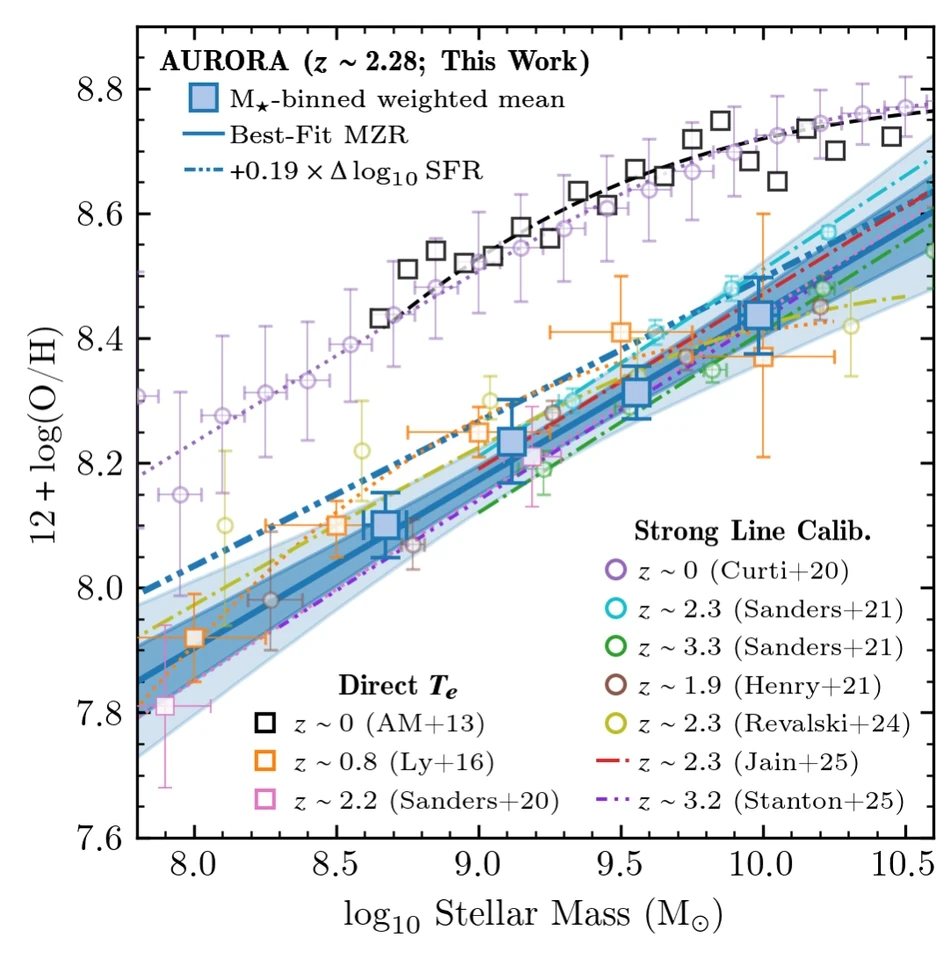
With JWST, I measured direct, temperature-based oxygen abundances for galaxies 10–12 billion years ago: the largest such sample at cosmic noon, constraining how galaxies became chemically enriched when the Universe was forming stars most actively.
Read more 4 EnvironmentHow does environment shape galaxy growth?
Clustering measurements of about 12,000 emission-line galaxies reveal a redshift-independent relation between line luminosity and dark matter halo mass, showing that galaxies grow together with their host halos, with evidence that halo quenching suppresses star formation in the most luminous emitters. Archival spectroscopy now makes 3D maps of the cosmic web possible, which I use to study how environment shapes galaxy evolution.
Read moreRecent results
Highlights from the last two years
Direct-method metallicities at cosmic noon
Using ultra-deep JWST/NIRSpec spectra from the AURORA survey, I measured direct-method (electron-temperature) oxygen abundances for 34 galaxies at z ≈ 1.4–3.5, the largest such sample at cosmic noon. The resulting mass–metallicity relation constrains how galaxies were enriched with heavy elements when the Universe was forming stars most actively.
The science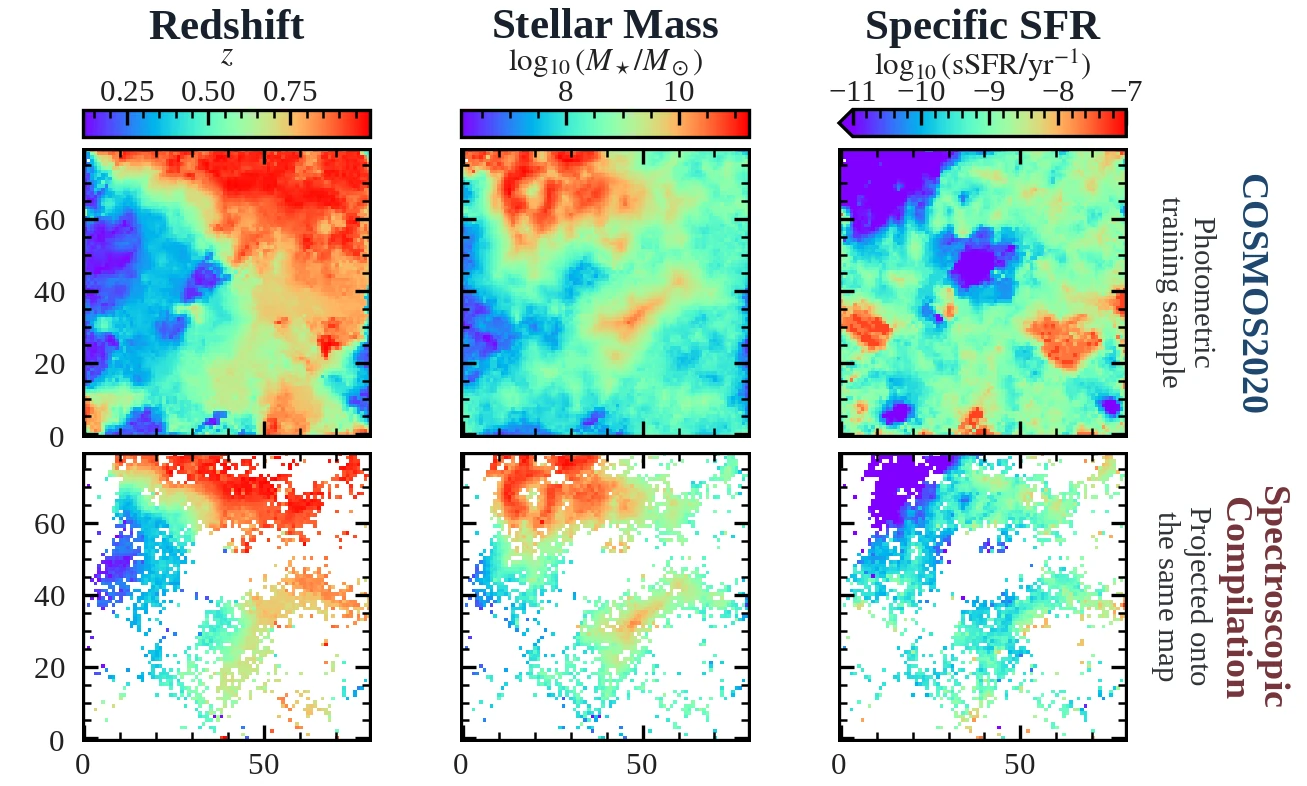
The COSMOS Spectroscopic Redshift Compilation
I combined two decades of spectroscopy in the COSMOS field into one public catalog: 487,666 redshifts of 266,284 objects from 138 programs. Self-organizing maps trained on the full photometric catalog reveal which kinds of galaxies still lack spectra, guiding future surveys with Rubin, Euclid, and Roman.
The science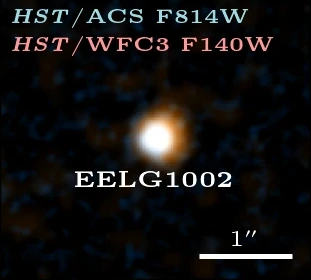
EELG1002: an analog of reionization-era galaxies
In archival Gemini spectra, I identified EELG1002, a galaxy at z = 0.83 with a rest-frame [O III]+Hβ equivalent width of about 3,100–3,700 Å, 32–36 times the typical value at its mass and epoch. Its low metallicity and efficient ionizing-photon production make it a close analog of reionization-era galaxies.
The scienceCollaborations
Major surveys I contribute to
From JWST and Hubble to the Roman Space Telescope (launched in August 2026) and wide-field ground-based imaging. Each entry describes the survey's goals, my role, and where to access the data.
Beyond research
Teaching, mentoring, outreach, and music
Teaching
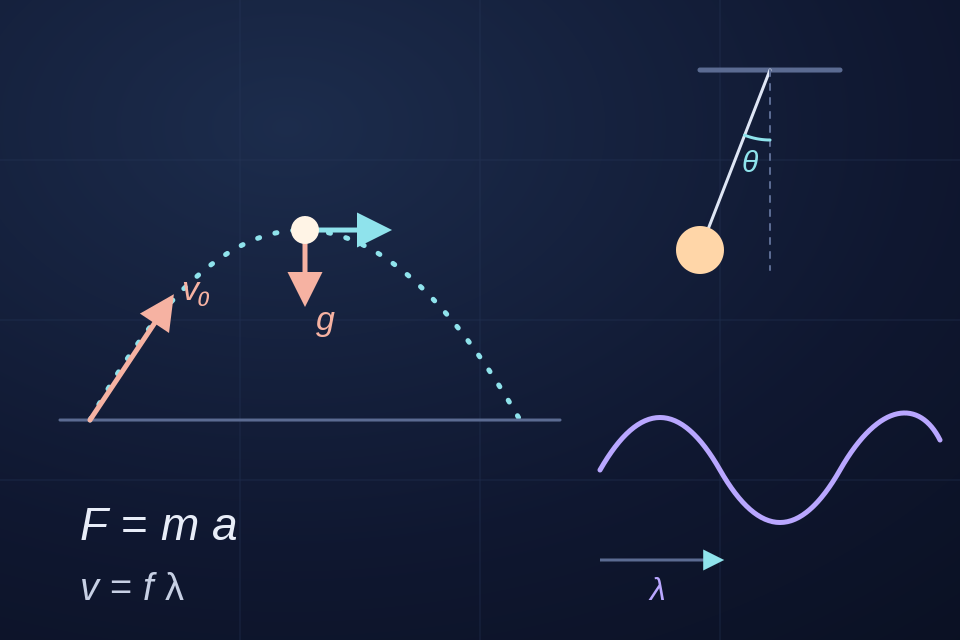
I teach physics courses for majors and non-majors at the University of the Pacific, built around active learning, live demonstrations, and clear expectations.
Teaching
Mentoring & learning forums
I have mentored 15 graduate and undergraduate students and founded two peer-learning forums. My mentees have gone on to Princeton, STScI, the Max Planck Institute, Apple, IPAC, and the SETI Institute.
Mentoring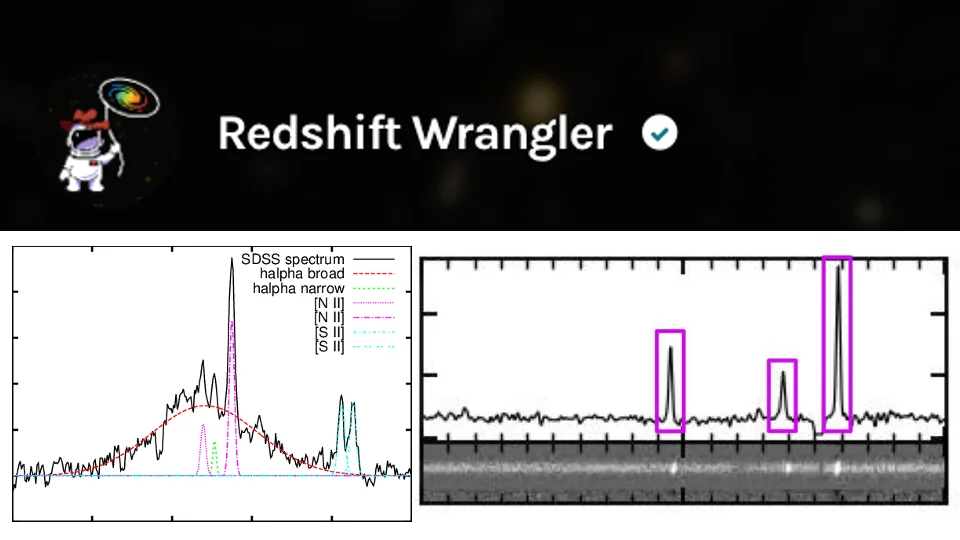
Outreach
From preschool classrooms and Astronomy on Tap to a citizen-science project that thousands of volunteers have joined.
Outreach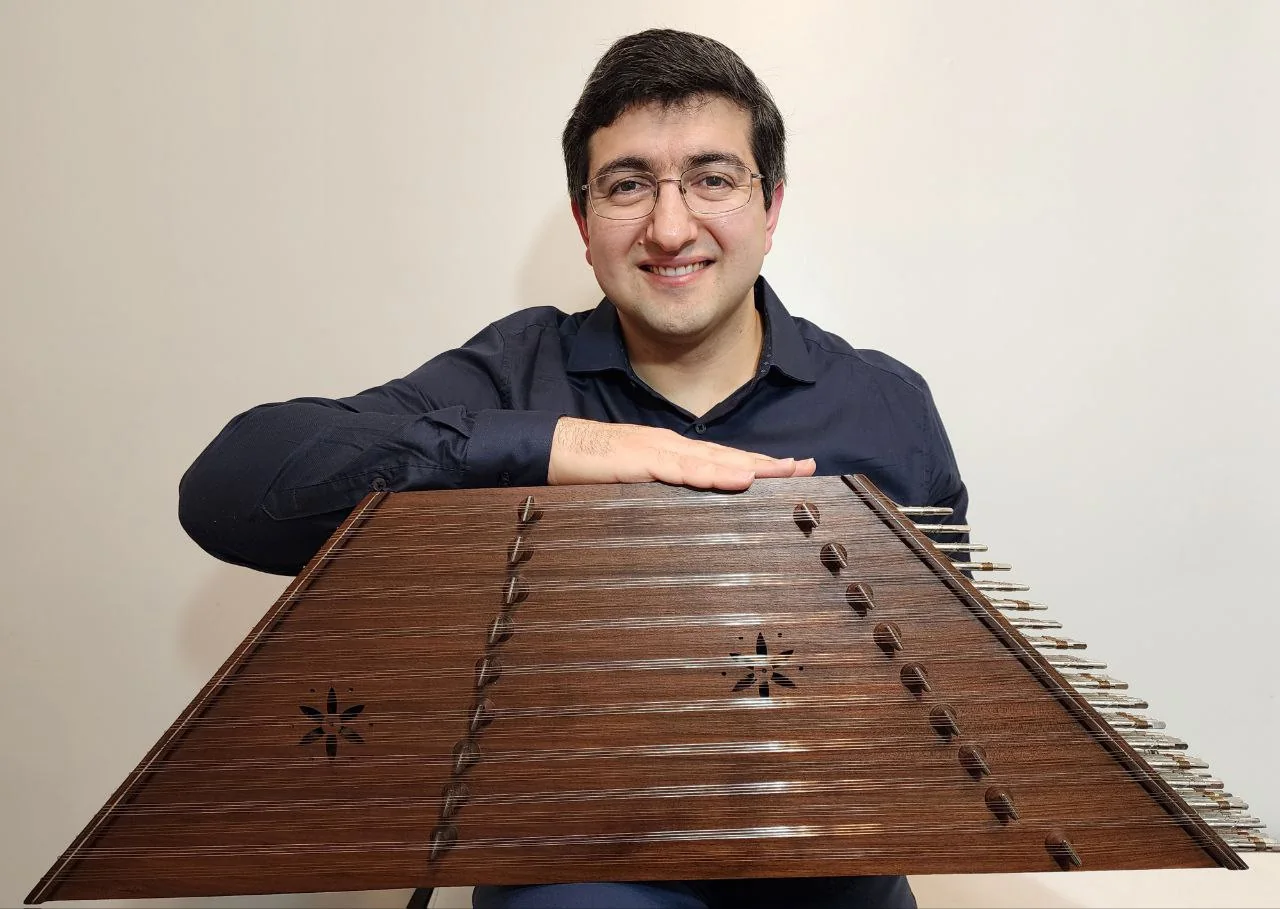
Music
About twenty years of classical Persian music on the santur, with performances at Strathmore, Untermyer Gardens, and UC Irvine.
Listen